
 Posted by
 Today marks a milestone: 1,000 consecutive days of learning Swedish and other languages on Duolingo! When I first opened Duolingo, I never imagined it would become a daily ritual for 1,000 days straight, no matter where I was or what I was doing.
Whether it rained, snowed, or the sun shined brightly over my head, I did it. Whether 36,000 feet above ground or from the comfort of my bed, I did it. Whether commuting late back from work or getting early to a Court of Justice to support the prosecution of a criminal, I did it.
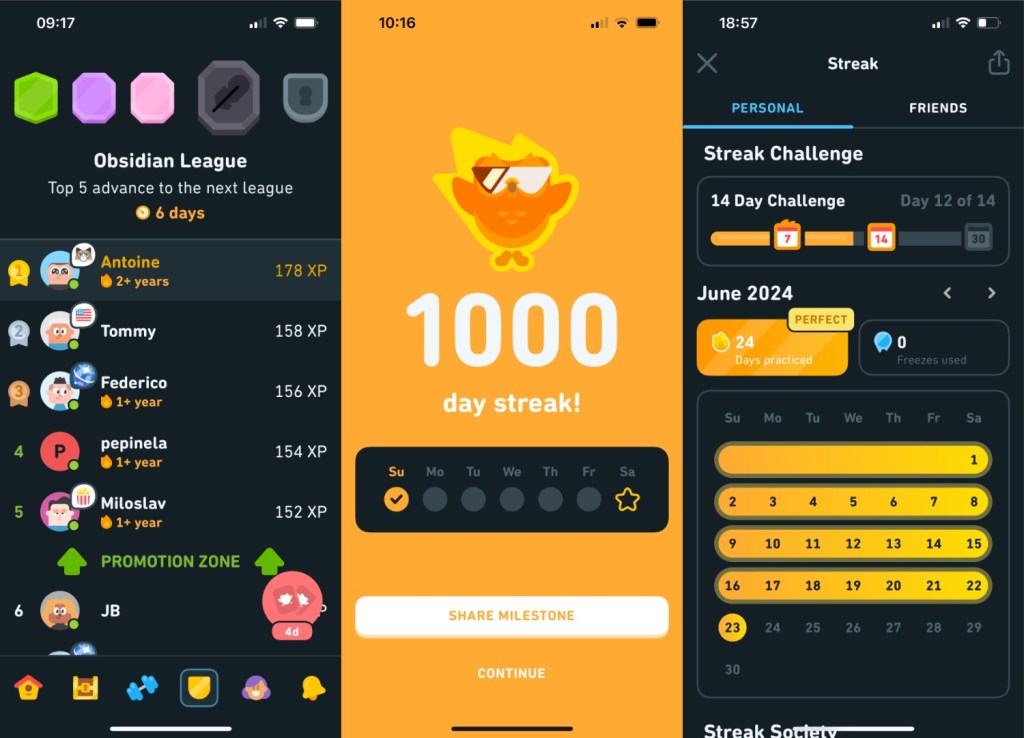
This 1,000-day period has been so hectic at times that, from an outsider’s perspective, this streak feels surreal. It sure felt that way for me too, before I understood this wasn’t simply about picking up a new language – it was an artefact of my natural curiosity for constantly learning new things, finally applied to language.
People who know me are aware of something I abhor: intellectual complacency, which often translates, in companies of all sizes, into an inability to critically review what’s being done and how it’s being done. Most people don’t like innovation, most people don’t like admitting they’ve failed, and, despite what is said in boardrooms and press releases, most organizations are wary of innovation.
Challenging my way of thinking and the status quo, defining new ways to do things and measuring their effectiveness, has always been my course of action despite the efforts it requires in a professional environment… but I love a challenge and I don’t regret for a single second working this way. Because organizations that want to be relevant in the long run need the input of critical lifelong learners to continuously improve and outpace the competition.
Why Lifelong Learning?
In a world where change is the only constant, which – think about it – Gen AI will just accelerate, the ability to learn and adapt is more valuable than ever. I’d even go so far as to say it’s the most important soft skill for decades to come.
That’s why you should take it upon yourself to develop this ability if you’re not a natural, and a gamified solution like Duolingo can be a perfect entry point into the wonderful realm of lifelong learning.
The benefits are countless. Whether it’s speaking a new language, acquiring technical skills, gaining an in-depth understanding of your consumer base or simply keeping abreast of the latest developments in your field, lifelong learning is always a journey worth embarking on.
They say the journey is worth more than the destination. This also applies to lifelong learning, because it’s all about developing a growth mindset. It keeps your mind active, improves your cognitive abilities, and helps you adapt to a rapidly changing world.

In a polarized society where misinformation, lies and hatred spread like wildfire, lifelong learning also equips us with the tools we need to critically evaluate information and discern fact from fiction. It’s a powerful antidote to the morosity and stagnation that can pervade our daily lives.
Being curious, open minded and fact-based will enable you to climb mountains that you thought were out of reach. This commitment has been instrumental in my personal and professional growth and has even helped me to find solace in dark times.
Gamification Magic
As a gaming industry veteran, I’ve always appreciated engagement mechanisms and the art of keeping players coming back for more. So, when I embarked on my quest to learn Swedish, I turned to Duolingo not just as a language-learning platform but also as a game that challenges my daily routine.
Duolingo makes learning fun and addictive, and if you’re a product owner looking to improve retention, the owl has deployed key gamification techniques that might inspire you:
- Streaks and Leaderboards: These features tap into our competitive nature. By maintaining a streak, users are motivated to practice daily, which significantly improves retention and learning outcomes. Leaderboards add a social dimension, encouraging users to compete with friends and other learners. The streak became my “high score”, and each day I strive to beat my own record!
- Progress Bars and Achievements: Immediate feedback and rewards make learning satisfying. This feedback loop keeps learners engaged by showing tangible progress. The bite-sized lessons feel like mini-games, and their completion provides a satisfaction of leveling up that mirrors the thrill of in-game achievements.
- Adaptative Learning Paths: Personalized lessons ensure we’re always challenged at the right level. This approach limits the boredom that can come from repetitive or overly simplistic tasks. The free version of Duolingo is falling a bit short on this, particularly on some languages, but they have monetization ;).
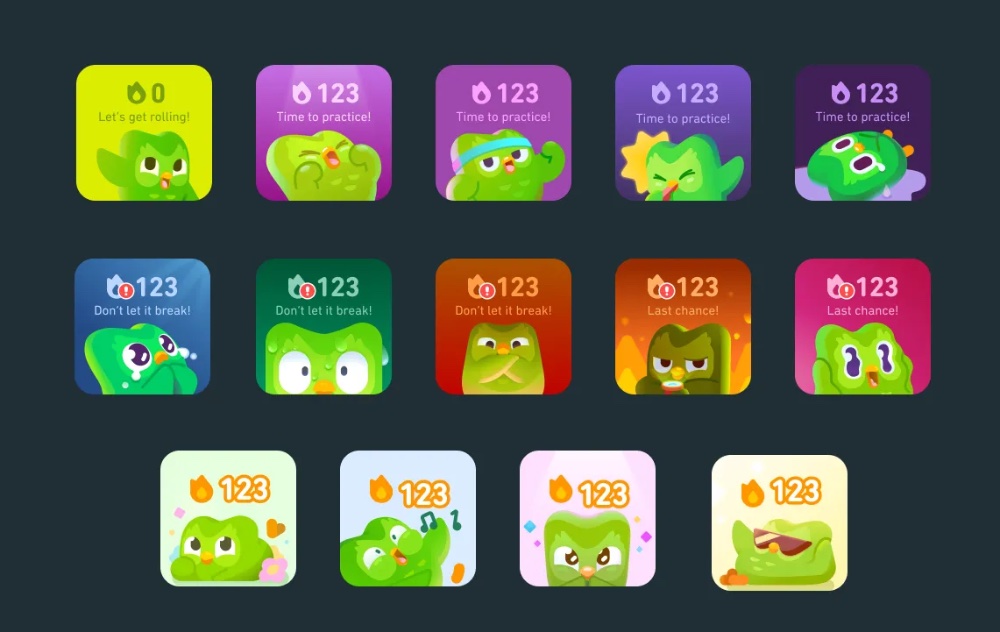
- Social Features: Duolingo uses push notifications and social features to remind users to practice and to create a sense of community among learners. This strategy not only boosts user retention but also enhances the overall learning experience by making it more interactive and supportive. The Duolingo social team is also doing a fantastic job building an out-of-app community.
Overall, Duolingo truly excels at making learning a language accessible and fun. It breaks down the daunting task of language acquisition into manageable, enjoyable pieces, much like how we design games to be user-friendly and engaging.
Food for Thought
As I reflect on my 1000-day journey, I realize that Duolingo has done more than teach me Swedish and other languages; it has shown me that the principles of gaming can extend far beyond entertainment. They can be powerful tools for education and personal growth.
Lifelong learning is a mindset that requires you to set time aside for it. When you’re under stress and high responsibilities, this sometimes feels impossible. But believe me, it is possible, and will give you your time back a hundred times!
Don’t limit yourself and go where your curiosity and desire lead you. I’ve earned several degrees in the recent years and I’m currently learning coding, all while building and developing startups. Sky’s the limit.
If gamification is a topic that interests you, I’ve put together a delicious selection of brain candies in the form of trusted topic experts’ blog posts, which I encourage you to read:
- The story behind Duolingo’s success by Jorge Mazal, Duolingo’s former Chief Product Officer. A must-read for product owners and marketing managers.
- Gamifying consumer apps by Joakim Achrén, a gaming entrepreneur for 20 years and CEO of Elite Game Developers, an organization that provides support to gaming startups.
- Habit-building gamification by Eva Grillova from Naavik, a leading gaming research and consulting firm.
Good luck on your lifelong learning and/or gamification journey. If you need any tips or advice, feel free to reach out!
Thanks for reading,
Antoine
 Antoine Emond - Digital Innovation
One comment